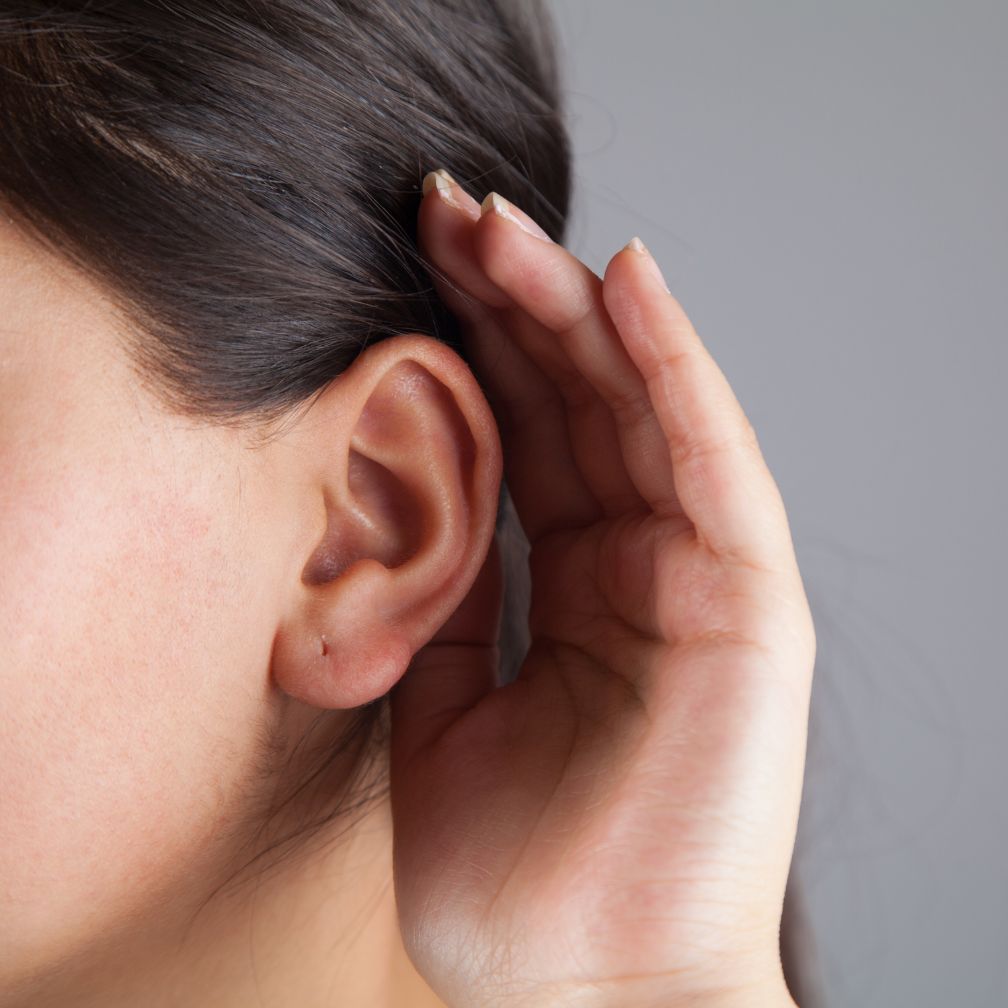
What causes that peculiar, unprompted sound that feels like ambient static or trapped air whispering in your ears? Why can’t anyone else hear it? This localized head noise is a genuine physiological event, not a trick of the mind.
Fortunately, your symptoms do not point to “phantom ring syndrome,” a psychological habit among heavy smartphone users who mistakenly believe their device is vibrating or ringing in silence.
More than likely, you are experiencing a very common peripheral vestibular and auditory condition known as tinnitus. Your perception of this sound is completely valid, though you must remain aware that several everyday variables can cause tinnitus to flare up.
Even with this internal hum, your ears retain the capacity to process active human speech. Instead, it functions as an omnipresent layer of sensory noise transposed directly on top of your standard daily hearing.
In this guide, we will investigate the neurological origins of this static, define its pathology, and explore proven methods to minimize or eliminate its impact.
The Root of Tinnitus: Why Your Brain Tracks This Persistent Hum
Tinnitus is (usually) a form of hearing loss. It manifests as a perpetual or fluctuating sound profile that occupies the foreground of your sensory perception. Depending on individual pathology, this subjective sound can remain mild enough to ignore during active hours. For others, however, the unremitting hum inside their skull feels utterly deafening, causing massive psychological distress and exhausting their patience.
Chances are, you have struggled to communicate the reality of your symptoms to loved ones, as this invisible impairment is nearly impossible to comprehend without personal experience.
Many patients struggle to accept that a roaring sound inside their ears cannot be recorded or validated by outside observers. You may even question your own psychological stability, wondering if the condition is a form of auditory hallucination. How can it keep me from understanding those around me? Or leave you tossing and turning for hours, totally unable to secure standard nighttime rest?
What is the noise you hear when it’s quiet?
You’ve probably noticed that the quieter it is, the worse your tinnitus gets. This occurs because the phantom signal inside your pathways no longer encounters any external acoustic competition; for instance, the average adult maintains absolute silence in their bedroom during sleep hours. They operate without a television background feed, avoid running any radio streams, and eliminate all ambient audio. Furthermore, being left alone with your internal thoughts allows the unprompted ear static to command your undivided attention, initiating an anxious loop that makes the volume seem significantly louder. Whether your condition presents as a faint hiss or a booming roar, a quiet nocturnal space creates a sensory vacuum that allows tinnitus to fully take control of your mind.
Differentiating Your Symptoms: Is a Rushing Wind Sound Actually Tinnitus?
Not only does the disorder defy easy explanation to outsiders, but sharing notes with another patient can frequently muddy the waters. They might describe a totally different frequency matrix or tonal texture, which easily leads you to conclude that your wind-like sound must be an entirely separate disease.
Yet, despite these tonal differences, your underlying diagnosis remains highly probable. The disorder presents with remarkable variety, shaping its subjective sound signature differently from one ear network to the next. Sufferers regularly document internal noises that encompass configurations such as:
- The fuzzy roar of unchanneled television feedback
- An unceasing structural or electrical humming sound
- A sharp, highly irritating electrical buzzing
- The classic, crystalline ringing tone deep within the ears
- An episodic, heavy thumping localized behind the eardrum
- A steady, monotonous frequency resembling an active dial tone
Under standard clinical circumstances, you remain the exclusive audience for the subjective white noise generated by your neural pathway errors. So if you ask a primary physician to confirm your symptoms, they probably can’t. The practitioner simply has to trust your diagnostic description, as there is no physical signal for them to measure.
Unfortunately, this clinical gap frequently leaves patients feeling misunderstood or dismissed by general practitioners who lack dedicated training in audiological medicine.
To illustrate, an industrial steelworker named Thomas shared his story: “The moment that intense ringing initiated, I consulted my family physician. While the doctor did state that it might be tinnitus, he didn’t really seem to understand how debilitating the noise was. He treated the problem as if it were an insubstantial issue that I could easily ignore. He mistakenly believed I could simply choose to ignore the frequency and completely failed to provide any therapeutic pathways or solutions.”
Partnering with a true audiology specialist resolves this sense of isolation, providing you with targeted clinical paths and specialized relief protocols. Frequently, the unique behavior of the phantom frequency serves as an anatomical roadmap, helping your doctor identify the perfect treatment.
When the Internal Static Matches Your Pulse: Understanding Pulsatile Symptoms
What makes it even harder to describe this noise to a doctor is the fact that there are so many different ways tinnitus can manifest itself. For example, if you hear a whooshing sound or a thumping sound in your ears, which is then followed by a steady series of beats that mimics your pulse, you may actually have a rare type of tinnitus called pulsatile tinnitus.
Fortunately, pulsatile tinnitus often yields a much higher cure rate than standard subjective tinnitus because it typically originates from identifiable structural health conditions, such as systemic hypertension or localized arterial narrowing.
Physically, the rushing noise can be created by changes in blood velocity through compromised or compressed pathways in the skull, resulting in an objective bruit. It’s critically important to get this checked out and treated, as in rare cases, the whooshing sound could be a sign that you’re heading for a seizure or stroke, either of which could prove fatal.
The Auditory Reality of Pulsatile Symptoms: External Verification Options
The reality is undeniable: this persistent head noise is a legitimate, exhausting condition that severely impacts quality of life. While traditional forms defy direct observation, rare presentations of vascular tinnitus enable a trained professional to utilize an amplified stethoscope to audibly track the internal murmur alongside you. It is vital to understand that this objective phenomenon is unique to circulatory-driven cases, a category that is statistically much rarer than standard neurological tinnitus.
Tracing the Roots of Your Head Static: Common Medical Causes
The most common cause of tinnitus is a loud noise that you were exposed to over a period of time. This pattern makes the condition an occupational hazard for musical performers, audio engineers, and workers across various trades who navigate intense decibel exposure shift after shift.
Occupational data highlights several high-risk industries where workers frequently develop severe auditory ringing, including:
- Factory Work – Operating around unmitigated industrial machinery for consecutive hours creates a highly toxic environment for your delicate hearing mechanisms. Beyond the raw volume, the high-pressure nature of manufacturing work spikes your stress hormones, which serves as a major secondary driver that worsens the internal ringing over time. If your job positions you near an active pneumatic riveter, you are facing a massive risk; these devices exceed 125 decibels, a level that causes immediate structural ear damage and severe, permanent static.}
- Modern Farming – Don’t blame it on the roosters. While those loud, early-risers clock in at around 90 decibels, there are many things on the farm that are much louder. Tractors, combines, cherry-pickers, milking machines… all of these farming implements make a lot of noise. Need to repair the fence? Even your table saw can pump out over 85 decibels, which is damaging over long periods of time.}
- Pilot – A jet engine is a staggering 140 decibels, even if you’re 100 feet away. While pilots do tend to wear ear protection, they’re often right next to these engines in smaller crafts. There’s no ear protection strong enough to protect them against this constant exposure, so all those hours spent in the air getting their pilot’s licenses are also causing them to slowly lose their hearing.}
- Highway Patrol Operators – While millions ride motorcycles for recreation, any professional assignment that requires operating a high-displacement bike for an entire shift places you at extreme risk for occupational hearing loss and secondary tinnitus. The identical acoustic risk applies to the prolonged operation of snowmobiles or commercial jet skis—though very few workers ride these vehicles for a living unless they occupy a highly unique and exciting role in outdoor law enforcement.}
- Hospitality Work – Fulfilling orders in a popular nightclub requires you to constantly separate human speech from an overwhelming background environment. The amplification systems in these establishments are routinely set to hazardous levels, forcing your ears to work in overdrive just to decode a simple sentence over the roar. Should your establishment regularly host live concerts or loud acoustic events, your ears are absorbing the exact same cellular damage that causes hearing loss in professional musicians.}
Across every single one of these vocational examples, the microscopic stereocilia (hair cells) inside your cochlea were physically damaged by prolonged high-decibel exposure. These delicate cellular structures are responsible for converting physical sound vibrations into electrical signals that the brain can decode into meaningful language. Unlike other cellular systems in the human frame, once these delicate structures are destroyed, they are gone forever, permanently altering your balance and leaving you with a compromised sense of hearing.
Everyday Variables That Can Cause Your Ear Ringing to Flare
While sound exposure remains the primary cause, several everyday health and environmental variables can drive up the volume of your internal ringing.
- Mental Health Challenges – Living with generalized anxiety or depression creates a highly frustrating catch-22 scenario. The moment your stress or mood drops, your neurological sensitivity to the ear ringing spikes, which immediately causes your psychological distress to worsen in response.}
- Ignoring Your Body’s Warning Signs – Your ears possess natural defensive thresholds and experience physical discomfort when a room is too loud. Rather than simply enduring the painful volume, you must actively protect your auditory system, as these delicate cells cannot be replaced once destroyed.}
- Circulatory Stress – Neglecting your cardiovascular metrics can compromise the delicate arteries supplying your internal ear networks. This lack of proper blood flow causes immediate spikes in internal head noise and steadily worsens your overall hearing loss over subsequent years.}
- Smoking – That antsy feeling that you get in between cigarettes can worsen symptoms. While the answer may seem like you should have another cigarette, this is only making it worse the longer you smoke because of the impact smoking has on your cardiovascular system.}
- Some foods – Some people find that caffeine and artificial sweeteners make tinnitus worse. Keep a food journal to track everything you eat, along with your tinnitus level, to find out which foods make your symptoms worse.}
- Some people – Being around certain people, especially people with a very negative outlook, can make tinnitus worse because it triggers high blood pressure, anxiety, and depression. Consider relationships that may be doing you more harm than good and decide if they’re important enough to risk your hearing and health. Remember, you can’t change other people, but you can choose to be around them less often.}
- Maternal Shifts – Roughly a third of all pregnancies involve the onset of tinnitus, typically caused by the intense hormonal changes, fluid retention, and blood pressure adjustments that occur during gestation.}
- Deep Wax Obstructions – Hardened cerumen accumulating deep within the canal can exert mechanical pressure on the eardrum, producing strange hums and static. Arranging to have this blockage cleared by an ENT specialist can provide immediate, total resolution of your symptoms in cases of simple impaction.}
- Ototoxic Pharmaceuticals – A wide array of medications, including specific opiates, broad-spectrum antibiotics, loop diuretics, chemotherapy regimens, and even common over-the-counter NSAID painkillers, carry documented ototoxic side effects. It is highly recommended that you consult both an audiologist and your primary physician to thoroughly evaluate your current drug profile for ear risks.}
Are there any treatments for tinnitus that work?
If you have an underlying condition, talk to your doctor. Specific systemic disorders significantly worsen your internal noise levels, particularly unmanaged anxiety and high blood pressure.
Once any known medical condition has been treated, it’s time to look at other options. Proven management modalities encompass choices such as:
- Relaxation Practices – Engaging in deep meditation, mindfulness yoga, or low-impact exercise can significantly downregulate your body’s fight-or-flight triggers. Cultivating healthy, substance-free coping mechanisms for life’s pressures is a discipline few people acquire during childhood or standard schooling. Nevertheless, thousands of individuals choose to master these tools later in life because they are highly effective at quieting the internal static.}
- Nocturnal Audio Camouflage – Utilizing soft, steady background static while you rest offers instant relief by reducing the contrast of the internal ringing. Make sure you never make the mistake of trying to completely submerge the symptom with loud earbuds or high-decibel environmental noise. That counterproductive habit will only accelerate your permanent hearing loss and increase the intensity of your symptoms as time goes on.}
- A hearing aid, which can be set to cancel the sound. Hearing aids today have advanced features like tinnitus cancellation. They can be programmed during the hearing aid fitting to emit a sound that cancels out the specific tone you hear.}
- Acoustic Neuromodulation – This clinical technique focuses on retraining your brain’s auditory processing centers to filter out the phantom noise. By introducing a gentle sound layer that matches your personal tinnitus profile, a specialist can desensitize your neural pathways. This process successfully coaches your mind to ignore the internal loop and prioritize real-world sounds, like conversations with family.}
- Cognitive Behavioral Therapy (CBT) – This evidence-based psychological intervention is expertly designed to dismantle negative behavioral patterns and stress cycles. For patients who frequently ruminate on distressing news or worry about external situations they cannot influence, CBT offers an ideal solution. It systematically coaches your mind to redirect its energy toward positive elements and areas where you maintain true autonomy, which rapidly reduces the stress that feeds your tinnitus.}
The Reality of White Noise Therapy: Management vs. Cure
You might wonder if the concept of fighting fire with fire applies to your ears, specifically using physical white noise to fight phantom white noise. A recent study in England found that while white noise therapy helps those afflicted by tinnitus, it needs to be paired with additional treatments.
There is currently no known cure for tinnitus – only treatments that can help you better manage your symptoms.
Given these facts, what are your best immediate options for addressing your ear ringing? Your absolute highest priority should be to secure a professional hearing evaluation from an expert. This essential baseline test will reveal exactly how much the internal static is degrading your word recognition score and speech comprehension during daily conversation. After that, you should discuss treatment options with your local hearing experts.
Understanding Auditory Pareidolia: Why You Might Hear Music or Voices in Static
Perceiving coherent songs or conversation inside a hum indicates that you are experiencing a unique sensory pattern rather than basic tinnitus. Furthermore, you can immediately set aside any panic or anxiety regarding your mental health; this experience is absolutely not a sign of schizophrenia or a severe psychiatric disorder. In clinical medicine, the primary diagnosis for this pattern is Musical Ear Syndrome, universal apophenia, or auditory pareidolia. These illusions occur because your central nervous system relies heavily on advanced pattern recognition to constantly organize and decode ambiguous environmental noise. When exposed to a flat wall of static, your mind can miscalculate the input and overlay an expected acoustic memory onto the noise. Specifically, audio pareidolia is the precise mechanical process where your brain converts meaningless background static into a structured audio track you remember, like a melodic tune. If there is no noise whatsoever, yet you still hear music, this may be a musical hallucination.