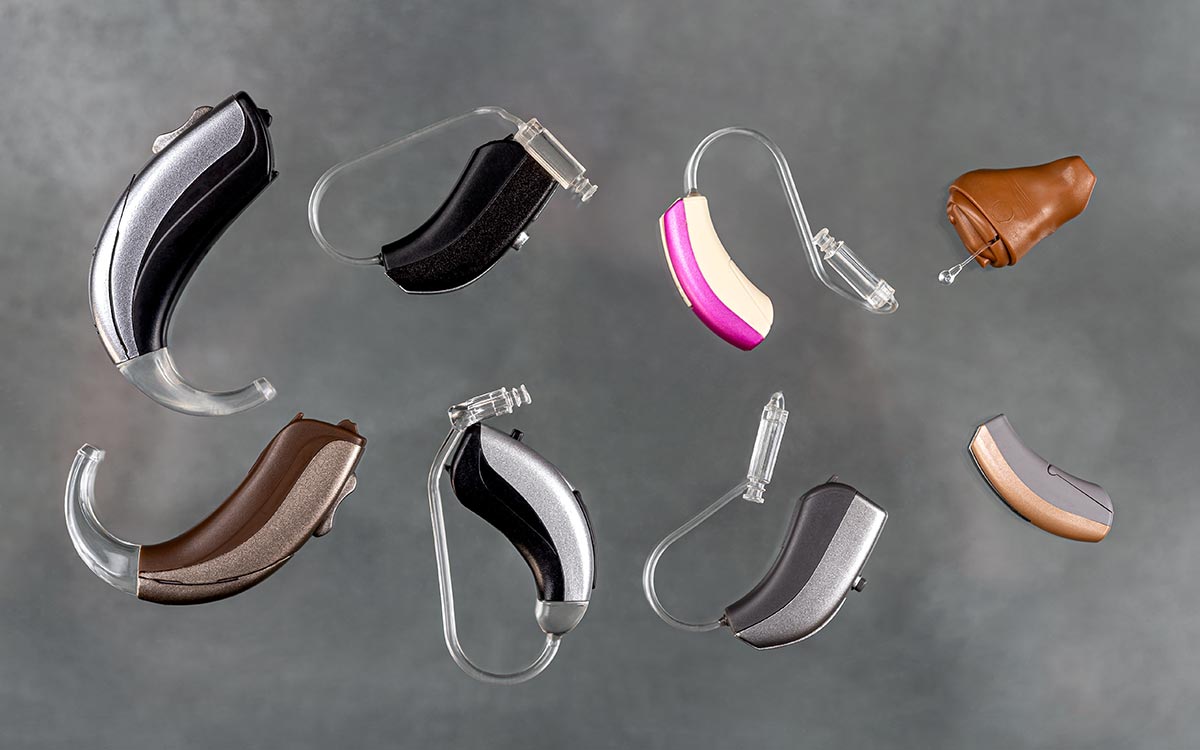
Choosing an instrument can feel overwhelming, especially when today’s devices come in so many styles, sizes, and technology levels. But regardless of your needs, there’s a hearing solution for every lifestyle, preference, and degree of hearing loss. It’s all about learning which model fits perfectly with your specific requirements.
Understanding the distinctions among the most popular types of hearing aids can help you feel more informed and confident as you explore your options. In this analysis, we look at current styles and the unique characteristics that define them.
ITC (In-the-Canal) Hearing Solutions
What they represent:
ITC models are custom-made to sit within the ear canal, though a small part of the shell remains visible in the ear’s outer portion.
Why people select them:
- Offers a smaller profile than bulkier behind-the-ear units
- Individualized shaping ensures long-term wearing comfort
- Suitable for mild to moderate hearing loss
ITC devices offer an excellent equilibrium between visibility and functionality, making them a popular choice for first-time users.
Exploring IIC (Invisible-in-Canal) Options
The Idea:
These are the smallest custom-made devices on the market today. They rest deep inside the ear canal and are virtually invisible when worn.
Why they are popular:
- Offers the most understated design of any hearing aid style
- Natural sound quality due to mic placement
- Designed for comfort with an incredibly small footprint
Because of their tiny stature, IIC devices typically work best for mild to moderate hearing loss and for those who prefer a nearly invisible option.
Full and Half-Shell ITE Varieties
What they are:
An ITE hearing aid rests securely within the outer ear, available in both full-shell and half-shell configurations. They are custom-made to fit the contours of your ear.
The Advantages:
- The larger size makes it possible to include more internal components and longer-lasting batteries
- The physical size is simpler to hold and adjust for users with fine motor concerns
- Suitable for mild to profound hearing loss
Many patients pick ITE devices because they provide a streamlined, self-contained design that doesn’t hook over the ear.
Exploring BTE Designs
What they are:
An external hearing aid is worn outside the ear for a stable fit. These models use an individualized earmold or tubing to direct sound inside.
Key Strengths:
- Known for remaining exceptionally adaptable and robust
- Work for almost all degrees of hearing loss
- The spacious casing enables high-tech extras and built-in power cells
BTE devices are a wonderful choice for individuals seeking reliability, ease of use, and strong amplification.
Receiver-in-Canal (RIC) Hearing Aids
What they represent:
In an RIC model, the speaker is separated from the main casing and placed inside the canal via an ultra-fine wire.
Why they are favored:
- Known for producing some of the most authentic audio in the industry
- Small, feather-light, and comfortable
- A versatile choice that works for various degrees of auditory needs
The combination of style and high-end functionality renders RIC models an ideal choice in the modern market.
Long-Term “Set and Forget” Devices
Operational Details:
Extended-wear models are semi-permanent units that a professional fits into the ear for an interval of several weeks.
Why individuals choose them:
- Eliminates the requirement to put in or take out the device every day
- Nearly invisible
- You can go about your entire life—including sports and rest—while wearing them
For a “hands-off” method of hearing assistance, extended-wear technology is the top recommendation.
Smart Hearing Aids with Bluetooth
Tech Details:
Connectivity-focused hearing aids that utilize radio to integrate with your digital life.
Digital Benefits:
- Turn your hearing aids into cordless earphones for all your favorite audio
- Provides an unobtrusive method to manage your hearing environment from your mobile screen
- Perfectly matched for the needs of a tech-savvy, connected individual
Bluetooth options are available across many styles, including RIC, BTE, and some ITC models.
Surgically Implanted Middle-Ear Systems
Procedure Info:
This technology involves an operative procedure to place a device that mechanically stimulates the bones of the middle ear.
Medical Reasons:
- An accessible path for patients who are unable to wear standard acoustic devices
- Pleasant alternative for chronic ear issues related to traditional devices
These devices require a thorough medical review by an ear, nose, and throat expert.
Finding the Hearing Aid That Fits Your Lifestyle
There is no one single “ideal” hearing aid; rather, there is an optimal one for you, determined by your medical needs and personal comfort. An expert care professional can guide you through your choices, answer questions, and help you experience how different devices look and feel.
Take the lead for your auditory health by booking a professional evaluation today. It’s an excellent first step toward better hearing and more confident communication every day.
Sources:
https://www.mayoclinic.org/diseases-conditions/hearing-loss/in-depth/hearing-aids/art-
20044116
https://www.hearinglife.com/hearing-aids/types
https://www.nidcd.nih.gov/health/hearing-aids